


We expected AI to boost our productivity 1000x with new possibilities, but we know that it is just a fairytale. Now everyone from housekeepers to presidents has access to AI on the web like ChatGPT, and we have to deal with that.
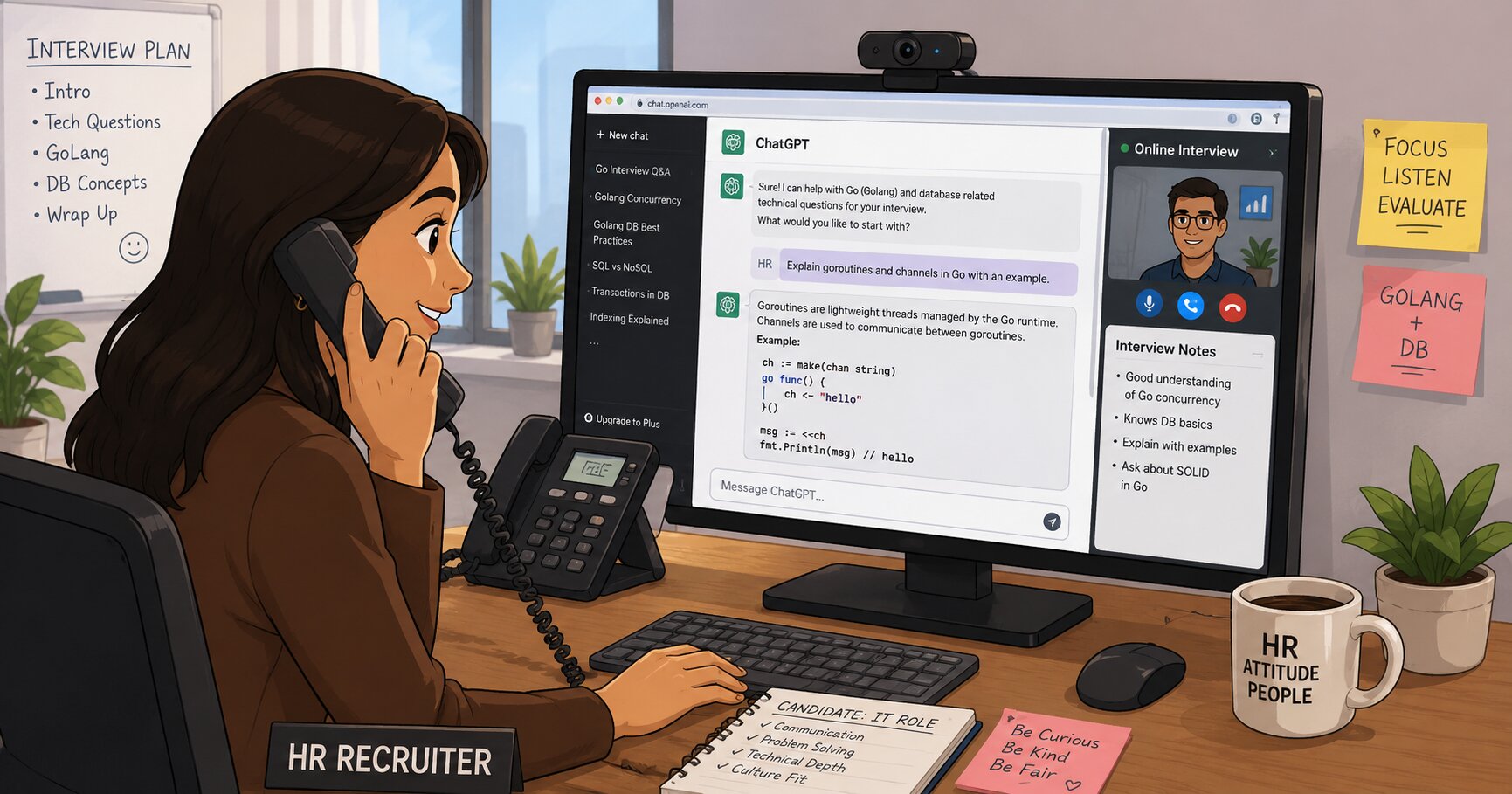
AI strikes back, but not the way we wanted.
Recently I had an interview with a recruiter — a very interesting and unexpected interview for me. It’s a funny story that can teach you something and make you vigilant.
The interview started in a very cliché way: asking me about my experience, why I left my previous company, what I’m looking for, and what my goals are for a new workplace.
We had a nice chat during the call for about 40 minutes, and I was ready to hang up when the recruiter told me: “NOW I have a technical screening for you to complete. Any objections?”
That’s not the first time I’ve encountered such an approach from HRs, but most of the time it was something simple, like a blitz questionnaire on specific topics — why X is in Y programming language, what the specifications on this topic are, and so on. Some narrow, simple questions. But not this time, he-he.
The questionnaire covered wide technical topics:
- what are goroutines
- what service communication methods do you know
- what are cgroups in Linux
- when will Go panic in the following examples
- what is the difference between a map and a slice
- how to fire an engineer with legal concerns (sic!)
The position was tech lead. I was a bit surprised by the variety of questions asked by the recruiter — there were about 10 of them.
I don’t remember them all, but what was very interesting during those questions was that she was typing the whole time I was talking.
I expected that she had some paper notes with written questions and answers to validate whether I was right or not, and to give me some rating (like in a school exam, hehe).
But that was something different: she was typing, then discussing follow-up questions with me, and correcting me if I was wrong. I was surprised.
Since I’m not that smart, I only figured it out at the end of the questionnaire, around question 8 (at least half of the questions in). I noticed that after her typing, there was a time lag during which she just stayed silent and waited.
I hadn’t paid attention to it earlier, but then the whole picture fell into place in my head!!
That was the reason she was typing — because she was chatting with ChatGPT with some prompt like: “Hey ChatGPT, I’m doing an interview with a senior engineer and want to conduct a technical screening. Our stack is foo, bar, baz, quux, and you have to prepare questions for a future tech lead and ask him. I will write his answers here, and you have to criticize and rate him based on his responses — whether we need to proceed with such a candidate.”
I would say I was amused by that fact. Earlier in my career, I had different interviews — solving LeetCode, some very abstract tasks like why coins are rounded, and other unexpected stuff to be asked during an interview.
But being interviewed by ChatGPT online with a real human being on the other side? Hell no.
That’s quite something new to be aware of.
The recruiter was very young, and I think she already used ChatGPT in her personal life and decided to give it a chance at work — it may work, why not?
I have seen some videos on YouTube where people read ChatGPT-generated text out loud, and it was so cringe — people talking with human voices but using language constructs like robots. The only missing line was “you are absolutely right,” which we have all become used to.
Now we have arrived at a new way of interviewing, where the recruiter has become an operator of ChatGPT, with a role assigned to ChatGPT, acting like a technical interviewer backed by ChatGPT.
Where are we going? Rhetorical question.
It is a pity that I found out too late and didn’t manage to ask her, to gauge her reaction, why ChatGPT interviews are being used right now.
Whose scintillating idea is this — hers, or company instructions?
Now recruiters have become multi-handed Shivas with technical skills backed by ChatGPT, psychological assistants with a human image, speech analyzers, and mood predictors — all those roles encapsulated in one person doing such activities during an interview, judging you and giving you an A or an F mark during the call.
Brave new world!